
Introduction
For years, replacing a broken phone, laptop or tablet often seemed easier than repairing it. A cracked screen, failing battery or charging problem could quickly turn into an excuse to upgrade to the latest model.
But attitudes towards technology are changing.
Across the UK, more people are beginning to ask a simple question before buying a replacement: “Can I repair this instead?”
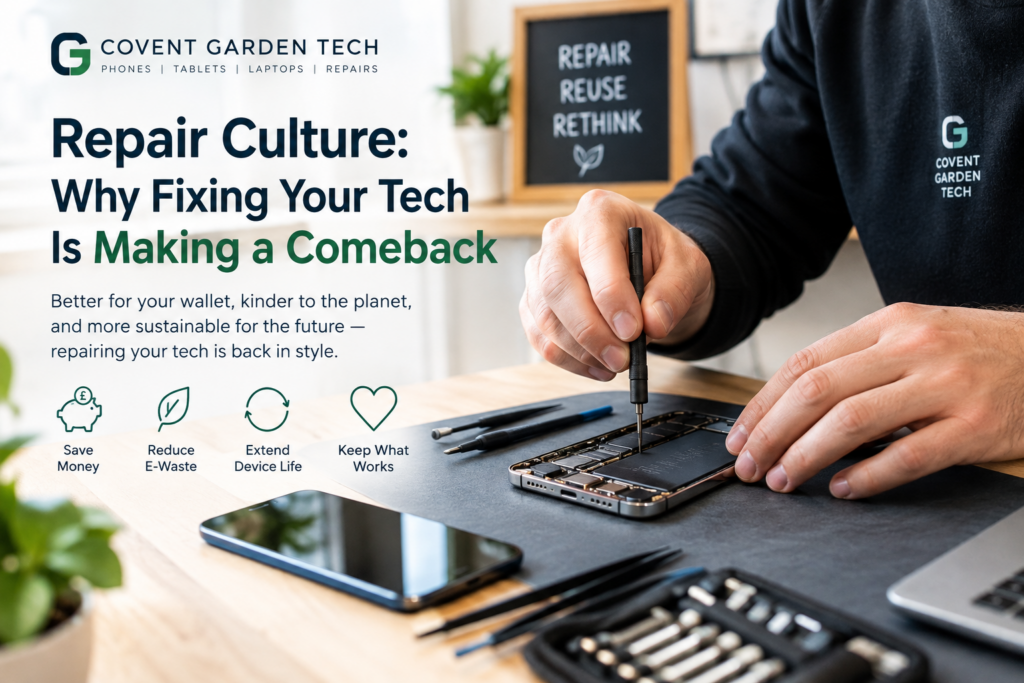
This shift towards a stronger repair culture is changing the way we think about our devices. Instead of treating electronics as disposable products, consumers are increasingly looking at repair, refurbishment and longer device lifespans as practical alternatives.

Why Are More People Choosing Repair?
There isn’t one reason behind the growing interest in repairs. For many people, it comes down to a combination of cost, convenience, sustainability and attachment to the device they already own.
Modern smartphones and laptops can be expensive to replace. If a device is otherwise working well, paying for a professional repair can make more sense than spending hundreds of pounds on a completely new one.
A damaged charging port, worn battery or broken screen doesn’t necessarily mean the entire device has reached the end of its useful life.
Sometimes, it simply needs the right repair.
The Environmental Side of Repair
Every electronic device has a story that begins long before it reaches your hands.
Manufacturing technology requires raw materials, energy, components, transportation and packaging. When a device is discarded prematurely, those resources can effectively be lost even though many of its components may still have useful life remaining.
Repair and refurbishment can help extend the period a device remains in use.
The UK government has increasingly highlighted reuse and refurbishment as part of responsible IT asset management. Its 2026 IT Reuse for Good Charter, for example, encourages organisations to take a “reuse first” approach to laptops and smartphones rather than automatically treating older equipment as disposable.
This doesn’t mean every broken device should automatically be repaired. Some devices may be too damaged or uneconomical to fix. But considering repair before replacement can be a more sustainable starting point.
The Rise of the “Repair Before Replace” Mindset
Repair culture is really about changing a habit.
Instead of:
Broken → Replace
the thinking becomes:
Broken → Diagnose → Repair if practical → Continue using
That small change can make a significant difference to how long people keep their technology.
A phone with a damaged screen might still have years of useful life left. A laptop with a failing battery may not need replacing if the rest of the machine performs perfectly well. A tablet that won’t charge might have a problem with its port rather than a completely failed device.
Professional diagnosis is important because the visible problem isn’t always the actual cause.
Repair Can Make Financial Sense
Technology upgrades can be expensive, particularly when a device is only a few years old.
Imagine buying a new laptop because the existing one has developed a charging issue. Before making that decision, it can be worth finding out whether the problem can be repaired.
The same applies to smartphones and tablets.
A repair doesn’t necessarily make sense in every situation. Factors such as the age of the device, the condition of other components, repair cost and availability of parts all matter.
The key is having enough information to make an informed decision.
A More Sustainable Relationship With Technology
Repair culture also encourages people to think differently about ownership.
Instead of constantly chasing the newest model, users can get more value from the technology they already have.
This approach fits into the wider idea of a circular economy, where products and materials are kept in use for as long as possible rather than following a simple “buy, use, discard” cycle.
The UK government’s guidance on electrical and electronic equipment specifically recognises repair and refurbishment as routes for keeping equipment in use.
For consumers, this can be as simple as asking:
Does this really need replacing, or does it just need repairing?
London Is Part of the Repair Conversation
In a city where people rely heavily on smartphones, laptops and other connected devices, keeping technology working is about more than convenience.
Your phone might be your map, banking tool, camera and communication device. Your laptop might be essential for work or study. A tablet could be used by a family every day.
When a device suddenly stops working, getting it repaired can sometimes be far more practical than starting from scratch.
London has also been part of wider research into consumer attitudes towards electrical and electronic repairs. Research commissioned around London found that people considered professional repair a significant route for dealing with damaged electronics, while highlighting that the decision to repair depends on factors including cost and convenience.
What Should You Consider Before Replacing a Device?
Before spending money on a new phone, laptop or tablet, consider these questions:
What exactly is wrong with the device?
Is the problem repairable?
How old is the device?
Is everything else working properly?
How much would a repair cost compared with replacement?
Are replacement parts available?
Would repairing it give you several more years of useful life?
A professional technician can help answer some of these questions by diagnosing the problem before you commit to a replacement.
Repair Is About More Than Saving Money
The return of repair culture isn’t simply about getting a cheaper solution.
It’s about changing our relationship with technology.
A broken screen doesn’t automatically mean a useless phone. A worn battery doesn’t automatically mean a useless laptop. And a charging problem doesn’t automatically mean it’s time for an upgrade.
Sometimes, the best solution is simply to fix what you already have.
As consumers become more conscious of waste, costs and the lifespan of their devices, repair is becoming a more natural part of the technology lifecycle.
The next time your device develops a problem, don’t immediately ask, “What should I replace it with?”
Ask:
“Can I repair it?”
That question could save you money, reduce unnecessary electronic waste and give a perfectly useful device a second life.
Looking for Professional Tech Repair?
If your phone, tablet, laptop or other device isn’t working as it should, professional diagnosis can help you understand whether repair or replacement makes more sense.
For more information about technology repair services, visit Covent Garden Tech.